

In 2025, the Marcos Jr. administration shifted its focus from production to beneficiary-centricity in delivering socialized housing. This shift was driven by two key initiatives: the launch of the Expanded Pambansang Pabahay Para sa Pilipino (4PH) Program and subsequent adjustments in housing approaches and targets. The primary goal of this shift was to benefit housing stakeholders, particularly homebuyers and developers.
Recalibrating the 4PH Program. The original 4PH modality, which focused on high-density vertical development, faced challenges in attracting both private developers and its intended beneficiaries. Recognizing this, the Department of Human Settlements and Urban Development (DHSUD) introduced the Expanded 4PH Program. This modification responded to the preference of many Filipino families for traditional house-and-lot units over high-rise condominiums. It also acknowledged the need for more diverse housing options to accommodate various income levels.
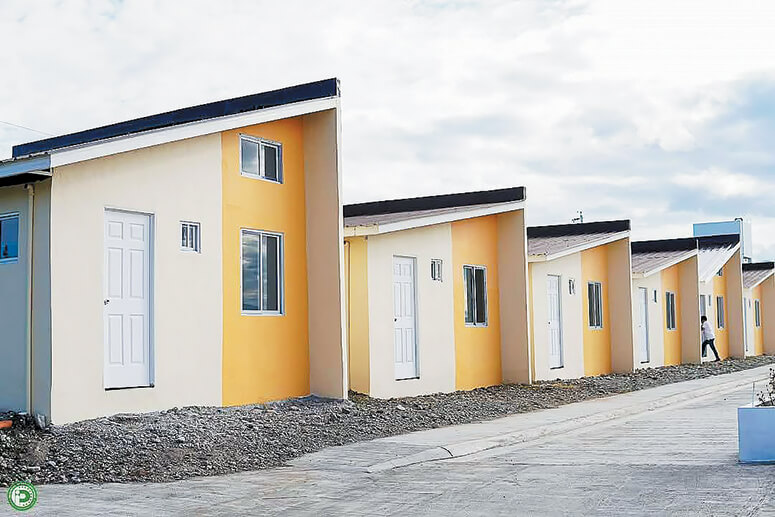
Reviving pro-poor housing modalities. The recalibrated program broadened its coverage to encompass horizontal homeownership, incremental housing, and rental housing. Additionally, it revived and enhanced the Community Mortgage Program, a program designed to empower communities to collectively secure land tenure and financing. In alignment with this initiative, the Social Housing Finance Corporation (SHFC) identified 34 sites for collective land acquisition, which would benefit approximately 5,000 families. Furthermore, the government resumed the issuance of certificates of entitlement and titles to families residing in areas covered by long-standing Presidential Proclamations.
Reducing loan interest rates. To make housing more affordable to its target beneficiaries, the Pag-IBIG Fund enhanced and added new programs. These included lowering interest rates for socialized and economic housing units to 3.5 percent and 4.5 percent, respectively; introducing a housing improvement program; and providing loans to investors and developers to undertake rental housing projects while extending their repayment period to 30 years.
Introducing new modalities. Rental housing was also introduced to provide a shelter solution for families who are unable to afford the monthly amortizations of socialized housing units. This approach caters to the lowest income decile as well as individuals and or families who could not afford or are not ready to purchase new houses.
Bayanihan Villages and disaster response. In response to emergencies and disasters, the DHSUD introduced and deployed modular shelter units and established, jointly with national government agencies and local government units, the “Bayanihan Villages” in disaster-stricken areas such as Cebu and Davao Oriental to provide dignified temporary housing to affected communities. Financial assistance was also provided to over 11,000 families through the Integrated Disaster Shelter Assistance Program (IDSAP).
Whole-of-Government collaboration and partnership. DHSUD and the Department of Economy, Planning, and Development (DEPDev, formerly NEDA) issued a Joint Memorandum Circular that revised the over two-year-old socialized housing price ceiling. House-and-lot packages of 27 sqm can now be sold for PHP 950,000, while condominium units of similar size can be priced at a maximum of PHP 1.8 million. Additionally, the minimum unit size was increased from 22 to 24 sqm. These changes were undertaken to incentivize the private sector to develop financially viable projects whilst building better-quality homes for our intended beneficiaries.
Another significant social initiative was the collaboration with the Department of Social Welfare and Development (DSWD). This partnership aimed to ensure that self-sufficient graduates of the Pantawid Pamilyang Pilipino Program (4Ps) could access affordable 4PH units, thereby taking a crucial step towards achieving economic stability.
Internal reforms and digital transformation. Internal processes were streamlined to minimize bureaucratic red tape and expedite permitting and licensing, in accordance with the Zero Backlog Program for regulatory functions. Additionally, the Department is transitioning to digitalization, with a target completion by 2028.
Looking ahead to 2026
As the administration intensified its flagship Expanded 4PH program, the year’s developments and strategic shifts would significantly shape the critical and challenging 2026.
Immense optimism. DHSUD, having laid the groundwork for a responsive housing, human settlements, urban development, and real estate sector, enters 2026 with immense optimism. The Department’s objective is to expand and ensure the long-term sustainability of its socialized housing initiatives in the years ahead.
Key shelter agencies’ initiatives. DHSUD will prioritize interest subsidies and leverage the financial capabilities of key shelter agencies, such as the Pag-IBIG Fund, SHFC, and the National Home Mortgage Finance Corporation. The success of the Expanded 4PH initiative will be directly linked to the KSAs’ ability to secure and disburse development and end-user financing loans on an unprecedented scale.
Enhanced collaboration. In 2026, the DHSUD will adopt a two-pronged strategy: Intensified private sector mobilization–where the government will intensify its efforts to encourage private developers to participate in the production of socialized housing units; and strengthened national government agency and Local Government Unit (LGU) partnership–where DHSUD will continue to collaborate closely with national government agencies and LGUs to identify suitable land, streamline project approvals, and allocate resources, particularly for rental and communal housing components.
DHSUD and the Department of Trade and Industry (DTI) – Board of Investment are currently exploring the possibility of classifying economic housing as corporate income tax-exempt. This initiative is anticipated to stimulate private sector construction.
Rental housing. The “UP Model” (Pook Marilag) will be expanded to other state universities and colleges, as well as other areas. This expansion aims to provide affordable rental housing options for low-income staff, government workers, and families.
Risk-informed plans. The DHSUD will enhance the resilience of socialized housing and other infrastructure against hazards like typhoons, earthquakes, and flooding. To achieve this, the Department is collaborating with the Department of Science and Technology (DoST) and the Department of Environment and Natural Resources (DENR). By utilizing new data-sharing agreements, local government units can prioritize the preparation of risk-informed comprehensive land use plans. These plans will be beneficial for the rapid growth of their communities while ensuring climate resiliency.
In conclusion, the year 2025 established the foundation for substantial housing delivery through the Expanded 4PH and its innovative modalities. The primary objective for 2026 will be to maintain momentum by streamlining bureaucratic processes and implementing localized pro-poor housing solutions. To achieve this, the Department remains committed to fostering engagement and dialogue with all stakeholders.
#PropertyReportFeature
#FeaturedStory
