

Scientists now warn that humanity has breached several of the safe limits that once kept the Earth’s systems stable, making the planet we design more volatile and less predictable than the one our building codes assumed.
For the Philippines, this is not an abstract headline. Stronger typhoons and rising seas are felt first and hardest by coastal and low-income communities. In this context, “smart, sustainable, and purpose-driven” developments are no longer branding phrases. They are conditions for survival.
We often imagine “smart” as gadgets and shining towers full of screens. In reality, smart begins much earlier: with designers who can read data, context, and community life. Sustainability should not be a badge added at the end of a project; it should be a habit of thinking long-term about carbon, resources, and maintenance. Purpose-driven developments should be anchored in real needs and grounded in people’s everyday lives, not in market trends.
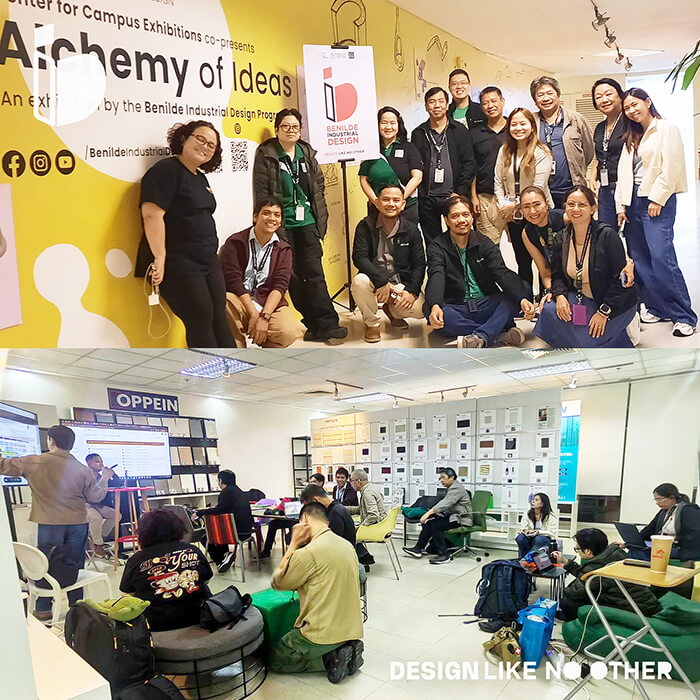
So, the crucial question is: what kind of designers are we forming in our classrooms and studios?
First, we need systems thinkers. Future-ready designers must see housing, transport, ecology, culture, and livelihoods as part of one interconnected picture. Imagine a student project in a flood-prone barangay that does not stop at raising the floor level, but will also consider drainage, shaded walkways, safe routes, even animal shelters in case of storms, and shared spaces that strengthen community ties. That is systems thinking at work.
Second, we need designers who are literate in climate and justice. Climate change shows up as lost workdays, damaged homes, and disrupted schooling. Future-ready education must train students to ask necessary questions: Who benefits from this development? Who might be displaced? What happens here during a flood, a heat wave, or a power interruption? A development that performs well on paper but leaves the most vulnerable behind is not truly sustainable and simply irresponsible.
Third, we need to treat imagination and technology as serious tools for resilience. When we invite students to picture a day in the life of a neighborhood in 2040, to write it, draw it, and design for it, it is not escapism; it is rehearsal. Emerging tools like artificial intelligence (AI), new materials, and digital fabrication should support this work, not replace it. We ask our students to treat these as laboratories for thinking, not just shortcuts for faster plates.
These shifts demand corresponding changes in how we teach. In the School of Environment and Design (SED) at De La Salle-College of Saint Benilde (DLS-CSB), we are moving from isolated disciplines to collaborative studios where architecture, interior, industrial, and fashion design students work on shared briefs, and from hypothetical plates to lived realities as learners engage with partner communities, local governments, and industry. We are transitioning from static syllabi to ongoing research and foresight, where climate scenarios, demographic shifts, and imaginative futures become legitimate design inputs.
Before we invent future-proof buildings, we must future-proof the education of those who will eventually design them.
As we enter a new year, this is an invitation to keep building the builders: to update curricula, invest in faculty development, partner across sectors, and value design programs that wrestle with climate, equity, imagination, and the quality of everyday life, not just with aesthetics.
If we commit to this work today, the smart, sustainable, and purpose-driven developments we aspire to will not remain slogans. They can become the lived reality of our cities, a future we do not simply endure, but consciously claim as our own–angkinin ang kinabukasan.
* * *
Harvey A. Vasquez is a licensed architect and Dean of the School of Environment and Design (SED) at De La Salle-College of Saint Benilde (DLS-CSB). He holds a Master of Architecture in Heritage Conservation (Architectural Science) from the University of the Philippines and maintains an active practice focused on cultural heritage and climate-responsive design. He serves on the CHED Technical Panel for Architecture and the Board of the Philippine Association of Architecture Schools (PhilASA Inc.). He also leads Maynila in Manila, a speculative studio-lab on climate futures in Philippine cities, from which this essay emerges.
#PropertyReportFeature
#FeaturedStory
