

In a matter of days, we will be concluding 2025, and this is the time to assess the year that was for the Philippine real estate industry. If we go back to the same time last year, the forecast for 2025 was generally about growth, recovery, and shifts to various real estate products, given the circumstances in the country. Looking at 2025 in perspective, the real estate industry is on track for growth and expansion.
The country’s central bank, Bangko Sentral ng Pilipinas (BSP), proactively stabilizes interest rates to temper economic shocks and balance growth. With this, the country is still among the fastest-growing economies in Southeast Asia. There may be national issues and economic turmoil in the country, but this proves that the players in the real estate industry are adaptive to changes to drive economic growth and stability.
This year, the biggest gainer is the industrial sector, which also covers logistics and warehousing. The shift to e-commerce brought by the pandemic continued to change the paradigm in product marketing and selling. New industrial estates were launched outside NCR with more joint ventures and partnerships.
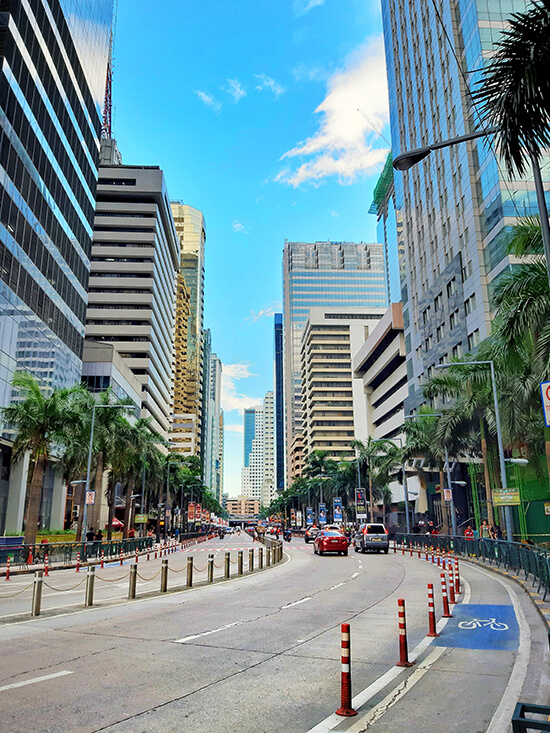
Another gainer is the residential condominium in the middle and affordable market segment. The condo oversupply continued to favor the middle market with various competitive offerings such as ready-for-occupancy (RFO) units, longer payment terms, lower interest rates, and huge discounts. This is also a win for mid-market developers as it increased their take-up and shortened their condo inventory.
Another commendable gainer is the premium office spaces in key markets and growth centers in the Philippines (i.e., Makati City and Bonifacio Global Center (BGC) submarkets). The POGO exit had a strong impact in 2024, but 2025 proved to be a resilient year for the office-leasing sector as various sectors, such as IT-BPM, continue to occupy high demand for offices.
The year 2025 also saw some sectors with neutral to conservative growth. The retail sector, especially retail and malls, has mixed growth patterns. This only reflects that geography plays a big role in retail and malls. With e-commerce on the rise, mall developers are now adapting to complement the market demand. Instead of competing, they adapted to an opportunity to convert malls into an interactive community space. Large malls are now offering experiential retail to drive foot traffic within mall spaces. So don’t be surprised if you see pop-up museums, unique events, or even beauty pageants inside mall activity areas.
One of the surprising changes this year is the luxury market, with underperformed take-up and weaker demand. Early this year, several developers launched luxury brands, signifying a bullish market. However, this year surprised the market with lower take-up and slow sales velocity, causing other developers to slow down for the luxury market segment. There is no single reason for this, but experts agree that the strong offering in the affordable market and recent controversies in the national government have somehow influenced luxury condo buyers and investors to slow down. The offices in the central business district (CBD) fringes also suffered from losses due to a mismatch between the target market and the product office offering. This sector has mostly been occupied by POGO offices.
Aside from private-sector initiatives, this year proved to be fruitful for cross-sector partnerships that promote economic growth and sustainability. The government’s Pambansang Pabahay sa Pamilyang Pilipino (4PH) accelerated project development in various locations across the country, activating cities and combating housing backlog. The focus on environment, sustainability, and smart growth is now becoming mainstream, if not prioritized, in development plans and implementation. Environment, Sustainability, and Governance (ESG) Reports are now comprehensive to projects. Global organizations such as the Asian Development Bank (ADB) and UN-Habitat offer grants and incentives to developments that mainstream sustainable development.
Considering the events this year, the real estate industry generally performed well in numbers that contribute to the national economy. The biggest winners this year are the consumers who enjoyed memorable activities in experiential malls with their families and friends, employees who can afford a condominium unit near their workplace, the labor workforce who are able to find work virtually, and our environment which is becoming one of the focuses now in the development. We can expect continuous growth and expansion in the years to come, but always be ready for surprises, whether good or bad.
* * *
Joel Noah Gargallo, REB, EnP is an educator under the Real Estate Management Program (REM) of the De La Salle-College of Saint Benilde (DLS-CSB) School of Management and Information Technology (SMIT) and an associate manager of a real estate development company in Makati.
#PropertyReportFeature
#FeaturedStory
