

At the PropertyGuru Asia Real Estate Summit (ARES) 2025, held as part of PropertyGuru Week in Bangkok, one idea resonated strongly across conversations on markets, communities, and the future of property: real estate is no longer defined by structures alone, but by the experiences they create. This theme came sharply into focus during the Design Spotlight session, “The Power of Place: Designing Retail, Culture, and the Human Experience,” led by Simon Mitchell, co-founder of global architecture and design studio Sybarite.
Mitchell challenged the industry to move beyond static, transaction-driven thinking and instead view places as living, evolving systems. “Places must behave like living organisms—they must be adaptable; they must be expressive and responsive. Static environments belong to the past,” he said. In an era shaped by shifting consumer behavior, digital disruption, and heightened expectations, adaptability has become essential to long-term relevance.
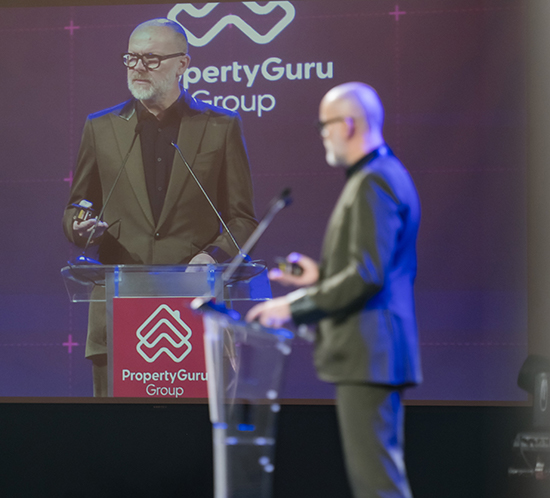
ARES 2025, themed “Trusted Marketplaces and Thriving Communties,” provided an apt platform for this discussion. Across the summit, leaders explored how trust, human connection, and sustainability are reshaping real estate across Asia. Mitchell’s talk added a design-led perspective to this conversation, emphasizing that experience is not decorative or optional—it is foundational.
Drawing from Sybarite’s global research and portfolio, Mitchell addressed three persistent misconceptions that continue to influence how projects are planned and evaluated. “Experience equals spectacle. No—experience equals substance, service, design, culture, and memory. Experience is an add-on. No—experience is the operating system. Service is secondary. No—service that is human, anticipatory, and relevant remains to be one of the strongest differentiators,” he explained.
These insights challenge the notion that experience is simply a marketing layer added late in development. Instead, Mitchell argued that experience must be embedded at every level—from spatial planning and tenant mix to service design and community engagement. This approach, he noted, is especially critical as consumers increasingly choose destinations based on how spaces make them feel, not just what they offer.
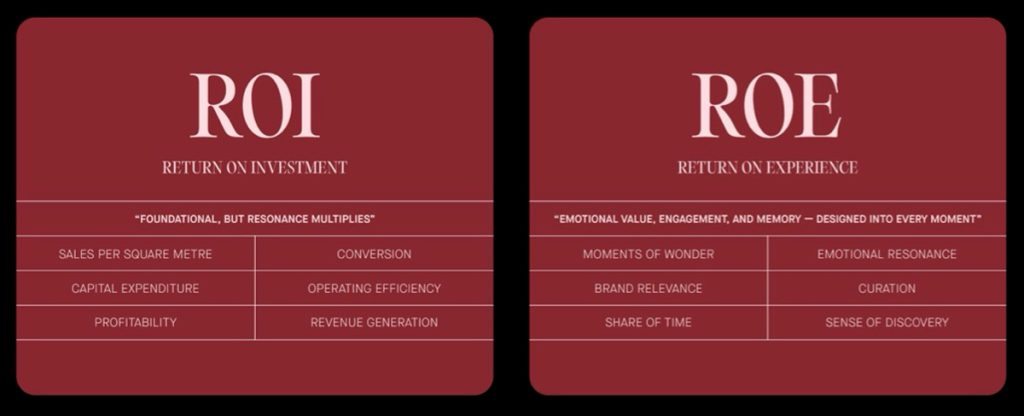
One of the most compelling aspects of Mitchell’s presentation was his reframing of value itself. Traditional return-on-investment metrics, he suggested, often fail to capture the true performance of places that succeed emotionally and culturally. “Experience is not cost, it’s the driver of ROI. Based on the data, we built a new framework—ROI: Return on Investment, ROE: Return on Experience, ROL: Return on Loyalty, ROH: Return on Heritage, and ROC: Return on Community,” he said.
This multidimensional model recognizes that places generate value in more ways than balance sheets can immediately show. Loyalty, cultural relevance, heritage, and community engagement all contribute to sustained performance over time. “A place that connects emotionally, serves intuitively, and evolves dynamically generates long-term returns far beyond a spreadsheet,” Mitchell added.
At its core, Mitchell’s message pointed to a broader transformation underway in the real estate sector. “What is the future of real estate? It’s a shift from spaces to places, from transactions to transformations, from buildings to emotionally charged ecosystems. What people buy is always going to change, but what they remember and what they return to is how a place makes them feel,” he said.
In a region where competition is intensifying and expectations continue to rise, ARES 2025 underscored a critical shift: long-term real estate value is no longer measured solely in yield or scale, but in loyalty, relevance, and emotional connection. The power of place, as Mitchell’s insights revealed, is fast becoming one of the industry’s most durable assets.
#PropertyReportFeature
#FeaturedStory
