

(Part 2 of two)
How to design responsibly in industry 5.0
Buildings that outlive us
Disposable design is no longer a viable option. The future lies in durable, adaptable, and resale-friendly interiors. Industry 5.0 challenges designers to create products and spaces that can evolve, be repaired, or resold rather than discarded.
But this is not an easy feat for designers, especially with the slew of DIY options available. If interested and committed though, there are ways. Some key approaches include:
- Incorporating reclaimed and upcycled materials into contemporary interiors
- Designing modular furniture that adapts to different space requirements
- Aligning with international eco-design policies that encourage longevity and reparability
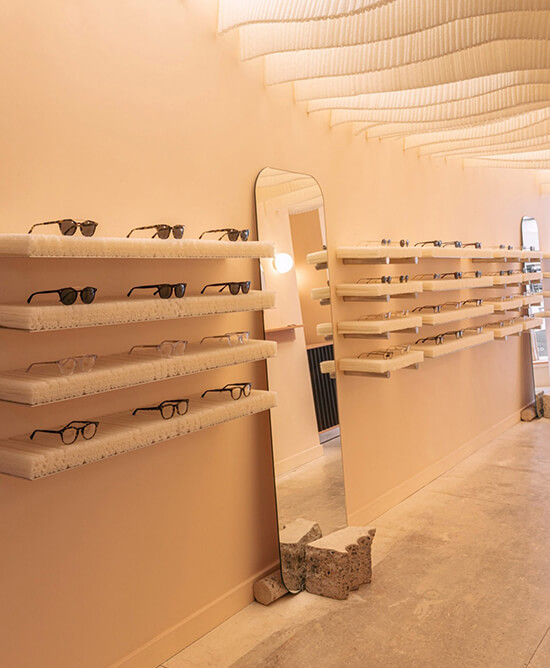
An example of this in practice is MONC’s eyewear store in London, which was constructed entirely from bio-based and recycled materials, ensuring that each component can be disassembled and reused. How can Philippine brands champion a similar “second-life” approach to interior design?
Regenerative design on giving more than taking
Industry 5.0’s sustainability model is not just about mitigating damage—it’s about actively improving ecosystems. Regenerative design takes sustainability a step further by enhancing biodiversity, replenishing natural resources, and restoring communities.
For designers, this can mean incorporating living walls, urban forests, and rainwater collection systems into buildings, choosing locally sourced materials to minimize environmental impact and boost the local economy, and empowering indigenous artisans and craftspeople, ensuring that cultural heritage plays a role in sustainable innovation.

A powerful example is Kolon Sport’s flagship store in Jeju Island, where marine debris was upcycled into furniture, demonstrating that waste can be transformed into design opportunities. Could similar adaptive reuse models be implemented across Philippine coastal areas and heritage sites?
How can the Philippines lead the sustainability movement?
The question is no longer whether sustainability matters, but how the Philippines can apply Industry 5.0 principles to its design landscape.
While we do have layered challenges in the Philippines to address, from the institutionalization of training and education on sustainability, to the implementation of building codes to protect the general public, some questions we’d want to ask ourselves include:
- Can developers commit to circular and regenerative building practices?
- What policies can support sustainability as a national standard?
- How do we educate and engage clients, businesses, and consumers in responsible consumption?
- How can designers push the boundaries of sustainable design with circularity and longevity as a consideration at every stage of the design process?
- How do we ensure these principles get inculcated into the hearts and minds of our clients and influence their behavior?
By learning from global best practices while harnessing local expertise and cultural heritage, the Philippines has an opportunity to become a leader in sustainable, forward-thinking design. Now is the time to go beyond treating sustainability as a passing trend and instead embed it as the foundation of how we shape the world around us.
If you are still wondering why this is important, think about this: The spaces we design today will define the legacy we leave for future generations. Our impact is one that we might no longer be alive to experience or witness, but we can ensure that the next generation will enjoy spaces that stand as examples of regeneration, resilience, and responsibility of the generation that came before.
#PropertyReportFeature
#FeaturedStory
