

I find the latest Residential Property Price Index (RPPI) Report from the Bangko Sentral ng Pilipinas (BSP) a positive development that should prompt a broader rethinking of how and where real estate growth is taking shape across the country, especially as it affirms the rising dynamism of regional markets beyond Metro Manila.
The report shows that the nationwide RPPI rose 7.5% year-over-year in the second quarter, a slight dip from 7.6% in the first quarter, but with quarterly growth accelerating to 4.2%, up from 2.6% previously. Beyond economic indicators, these numbers signal a shifting momentum, especially outside the traditional centers of gravity.
For years, the narrative of Philippine real estate has been anchored in Metro Manila. The capital has long been the default canvas for developers, investors, and urban planners. But the BSP data tells a different story: areas outside the National Capital Region (NCR) led the growth, with prices increasing by 11.5% year-over-year and 10.5% quarter-over-quarter.
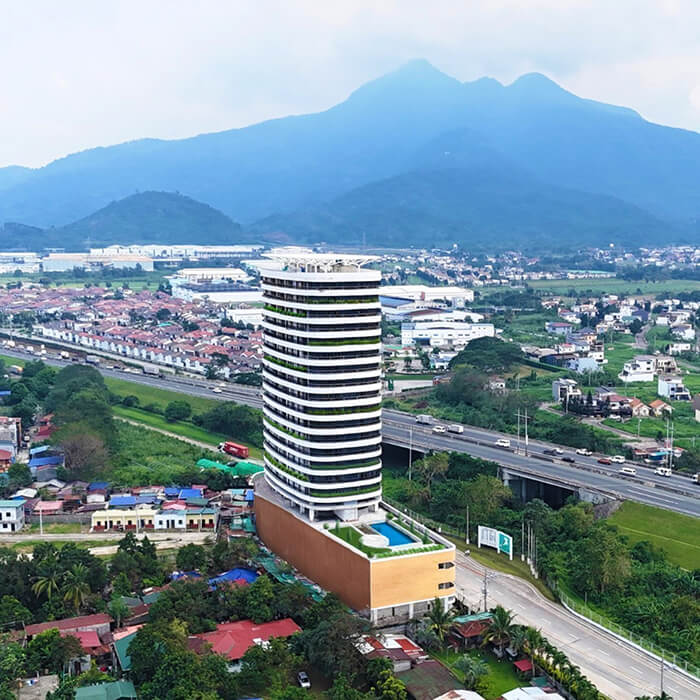
As someone who has spent the last 15 years in the Philippines building in emerging locations like Cagayan de Oro City, Bukidnon, Santo Tomas in Batangas, Morong in Bataan, Pampanga, and Puerto Princesa City, I see this as a quiet validation of what we have long believed. Real growth, I’ve always believed, happens where people are building new lives and not just bigger cities. It’s in the places where urbanization is still fluid, where communities are forming, and where architecture can still shape identity.
Aside from the decentralization thrust of the government, we are reimagining what “development” means. In emerging cities, we’re not just replicating the density and congestion of Metro Manila but crafting new models. These places offer the chance to integrate sustainability, local culture, and economic inclusivity from the ground up.
Take Cagayan de Oro (CDO) for instance. It’s not just a gateway to Northern Mindanao but a city with its own rhythm, aspirations, and potential that I have personally come to love. When we launched Verona Uptown there, developed by Italpinas Development Corporation (IDC) Homes, our fully owned subsidiary focused on affordable, green, and aspirational developments. We were not chasing trends; we were responding to a pulse. That project, like others we’ve done, was designed to be both green and accessible. At Italpinas, we want our projects to be a reflection of what future Filipino homes could be.
We have always believed in anticipating where the market is headed, not simply reacting to it. Being a first mover means seeing potential before it becomes obvious. Our work in cities like CDO and Puerto Princesa reflects this vision. Those who invested with us did not just buy property but have, in fact, joined a movement toward sustainable, inclusive growth.
Of course, we’re not alone in this. The partnerships we’ve formed—with hospitality brands like Dusit Princess and Ascott—are part of a broader ecosystem. These collaborations show that even global players are recognizing the value of investing in cities beyond Metro Manila.
The BSP report also highlights a divergence in housing types. Detached houses and townhouses posted significant price gains. This may suggest a subtle shift in consumer preference toward more grounded, spacious living. This is another opportunity for developers to take advantage of.
Mortgage activity also rebounded sharply in Q2, with residential real estate loans rising 14.7% year-over-year. This tells us that confidence is returning not just among developers, but among buyers. People are willing to invest in homes again, and many are doing so in places that offer more than just proximity to business districts.
What excites me most is the opportunity to shape these emerging narratives. Architecture, when done thoughtfully, becomes a form of storytelling. It reflects not just economic trends, but cultural aspirations. In cities like CDO and Puerto Princesa, the desire for identity is reflected in a preference for spaces that feel authentic and locally grounded.
This is why I continue to advocate for development beyond Mega Manila as an expansion of the canvas. The Philippines is an archipelago of possibilities. Each city, each region, has its own story to tell. And real estate, when done right, becomes the medium.
#PropertyReportFeature
#FeaturedStory
