

At first glance, Filinvest City’s parks appear as tranquil pockets of green amid the bustle of Alabang—a network of open spaces, waterways, and walking paths designed for leisure and community life. But beneath their calm, these landscapes perform an invisible yet crucial role: protecting the city from floods through a natural system built into their very design.
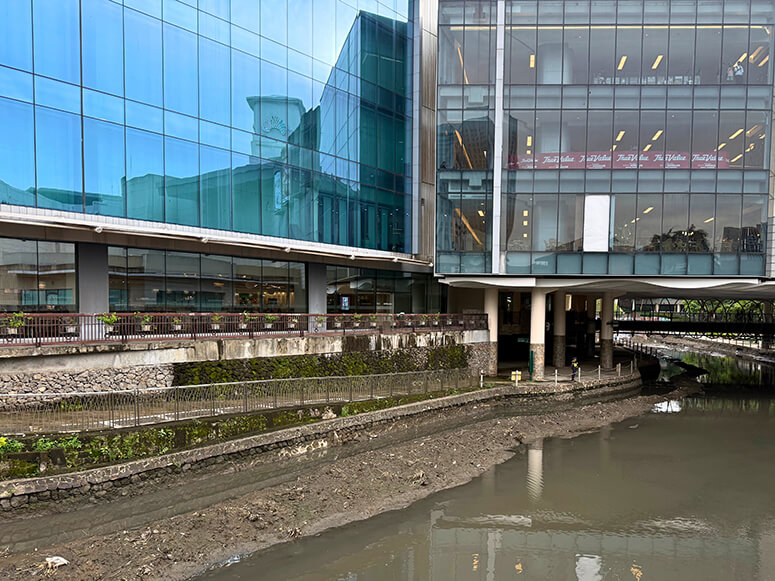
Filinvest City recently began dredging works at the Water Garden as part of its long-term maintenance program to sustain the health of its waterways. The effort is part of a continuing cycle of care to ensure that the city’s natural drainage network remains resilient and in balance with its urban surroundings.
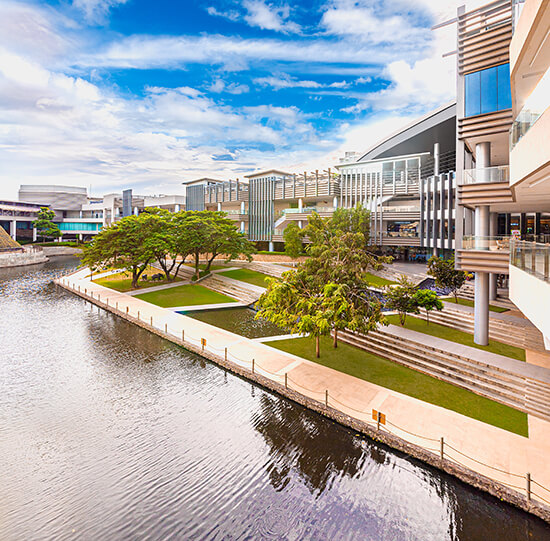
Dredging involves the removal of natural buildup along the riverbed to restore depth and allow steady water movement. During this stage, sections of the riverbed may become visible or the water level may appear lower—a temporary and expected part of the process. Once completed, the river returns to its normal flow, revitalized to perform its ecological and hydraulic functions more efficiently.
This periodic rehabilitation prepares the waterways for the rainy season, when managing water flow becomes essential for the safety and comfort of residents and visitors alike. The river that passes through Filinvest City forms part of a larger system that drains toward Laguna de Bay. Within the city, it has been carefully integrated into the park network, demonstrating how design and nature can coexist to strengthen urban resilience.
The flow begins at Creekside Park, a wetland that acts as a natural buffer during overflow. Its soft, vegetated edges filter and absorb runoff before it moves downstream, helping prevent erosion and fostering habitats for birds and aquatic species. This natural filtration turns flood control into an ecological feature, where sustainability is built into the landscape itself.
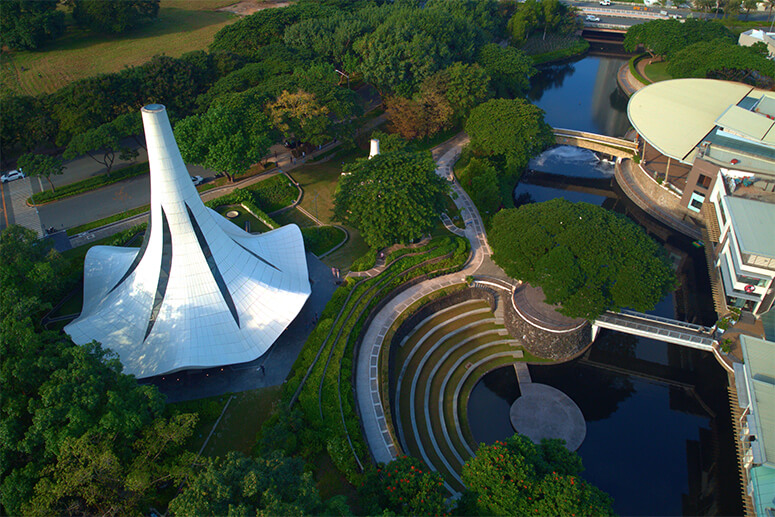
Downstream, the river continues through River Park, where a series of dams and weirs gently regulate its movement. These structures ensure that the water flows in a steady rhythm, protecting both the ecosystem and the park’s open spaces. The controlled movement also enhances the park’s character as a place where nature and city life intersect seamlessly.
The river’s final stop within Filinvest City is the Water Garden beside Festival Mall—a space intentionally designed to act as a catch basin during heavy rains. The garden temporarily holds rainwater, releasing it gradually as levels subside. Its adaptive landscape means that water pooling in the area is not a flaw but part of its purpose. As levels rise, the Water Garden transforms into a visual display of how art, engineering, and ecology can work together, with sculptures and plantings designed to respond gracefully to changing conditions.
Together, Creekside Park, River Park, and the Water Garden form a continuous green corridor that ties the city’s six major parks into one interconnected system. These parks serve as natural catchments that absorb rainwater, reduce surface runoff, and moderate the local climate while providing open, welcoming spaces for the community.
Through this intricate network, Filinvest City shows how forward-thinking urban planning can merge infrastructure with landscape design. The current dredging works at the Water Garden are a reminder that such harmony requires constant care—keeping waterways clean, ecosystems vibrant, and communities protected.
In Filinvest City, what lies beneath its serene scenery is a hidden flood control system—a quiet, working proof that modern cities can stay both beautiful and resilient when they move in rhythm with nature.
For more information, visit Filinvest City’s official Facebook page @FilinvestCityOFFICIAL.
#PropertyPR
#MediaRelease
