

The constant evolution of the Philippine property market has resulted in an aggressive development of masterplanned communities across the Philippines. These integrated communities are found not just in central business districts (CBDs) in Metro Manila but also in fringe locations, including key cities outside the capital region.
The expansion of demand outside of Metro Manila has spurred developments outside of the capital region. Rising disposable incomes, sustained inflow of remittances from Filipinos working abroad, and the perennial need to plug masterplanning gaps, including in key areas in the countryside.
The aggressive development of these integrated communities was partly facilitated by the Philippine government’s infrastructure push. These big-ticket public projects have undeniably guided the developers’ massive masterplanning initiatives outside of Metro Manila.
But developers are cognizant of the fact that launching these massive townships just won’t cut it. Property firms need to stand out and differentiate to attract the interest of end-users and investors.
Green and sustainable features
Colliers Philippines believes in the importance of open and green spaces within residential enclaves. The pandemic has changed the way people live, work, play, and shop, resulting in developers integrating new features into their projects to satisfy residents’ evolving preferences.
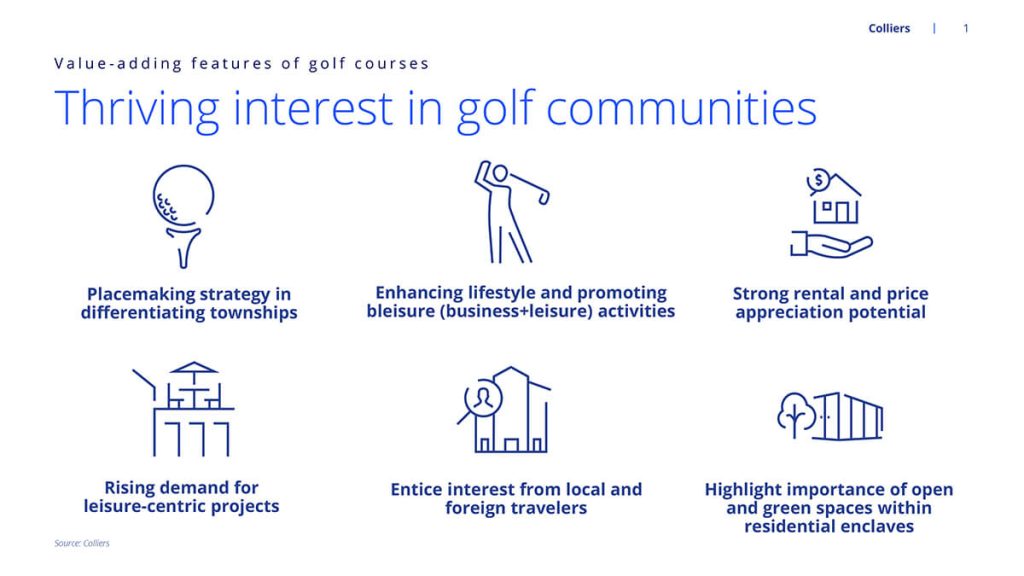
In a poll conducted by Colliers that covered property analysts, brokers, investors, and end-users as respondents, more than 90% believe that having green and sustainable features is important in purchasing a residential unit. And these green and open spaces are among the key features of thriving golf communities.
We believe that developers should continue innovating with their condominium projects by offering new features and services and by aggressively differentiating. We have seen several developers integrating more healthy and sustainable amenities into their newly-launched projects. Some have also incorporated unique features such as glamping nooks, garden gazebo, and sky promenades as hyper-amenitized condominium developments become the norm. These upscale amenities complement the expansive green and open space offered by property developers. This is a trend we see persisting in the years to come.
Placemaking and golf-centric communities take a central role in differentiation
Some developers are further ramping up their differentiation strategy by developing leisure or resort-theme masterplanned projects. A number of property firms are even launching residential enclaves near or within golf communities. This will be a differentiation approach that we see leading the strategies of developers planning to tap the discerning and affluent residential market. What has been evident is that property firms are infusing the ‘placemaking’ approach into their differentiation strategies. Placemaking refers to the multi-pronged approach that developers and urban planners employ in planning, designing, and managing public space in a masterplanned community. We believe that a well thought-out placemaking strategy should keep people interested to stay and live in an integrated township. Golf communities are starting to take a central role in Philippine property developers’ placemaking initiatives.
Overall, placemaking should help transform places into destinations where people can synergistically converge. This is one of the major reasons why property developers integrate golf courses into their massive residential enclaves or launch new ones near golf communities. These golf communities will likely play a vital role in developers’ placemaking strategies.
Zeroing in on lifestyle and potential yield and price enhancement
For residential end-users, we recommend opting for developments in mixed-use communities as these enhance working and living conditions. In fact, living near a golf community enhances the lifestyle of residents and promotes business+leisure (bleisure) activities in an integrated community.
At Colliers, one key recommendation that we have for investors is to choose projects in townships due to possible yield and price enhancement. We project strong rental and price increase potential for residential projects near or within golf communities, especially with the growing demand for green and more open spaces. We also see greater opportunities for similar residential developments given the strong rebound prospects for the country’s travel and tourism sector.
Putting a premium on convenience, accessibility, and connectivity
Residential investors and end-users continue to put a premium on accessibility and convenience. The 15-minute community concept appeals to them, especially now that everything is fast-paced. Residential projects’ proximity to offices, malls, and other institutional facilities such as schools and hospitals is highly important, especially to a new breed of residential investors, including millennials.
Colliers recommends that developers continue highlighting the advantages of living within CBDs and integrated communities, and to consider improving amenities and facilities in their projects to meet constantly changing buyer preferences.
Why masterplanned communities will remain popular
There’s actual strong demand for masterplanned and integrated communities that’s why we see developers proactively employing the township mindset in their projects.
Whether developing their own landbank or partnering with foreign firms to build these massive projects, there’s no denying that developing integrated townships is the way to go. This should be strengthened further by the national government’s commitment to develop crucial public projects and spur economic growth in regions–or decentralization.
#PropertyReportFeature
#FeaturedStory
