

The flexible office space market in the Philippines is expected to further grow, driven by the evolving workplace dynamics and the popularity of hybrid work, according to a report by real estate services firm KMC Savills.
“The demand for flexible office spaces in the Philippines continues to grow as occupiers adapt to evolving workplace dynamics, with companies seeking adaptable work environments that can accommodate fluctuating team sizes and hybrid work arrangements,” KMC Savills said in its Philippine Flexible Office Report.
It added that in response to rising vacancy rates in the traditional office sector, a growing number of office developers are partnering with flexible workspace operators to diversify portfolios and offer more adaptive, demand-driven workplace solutions.
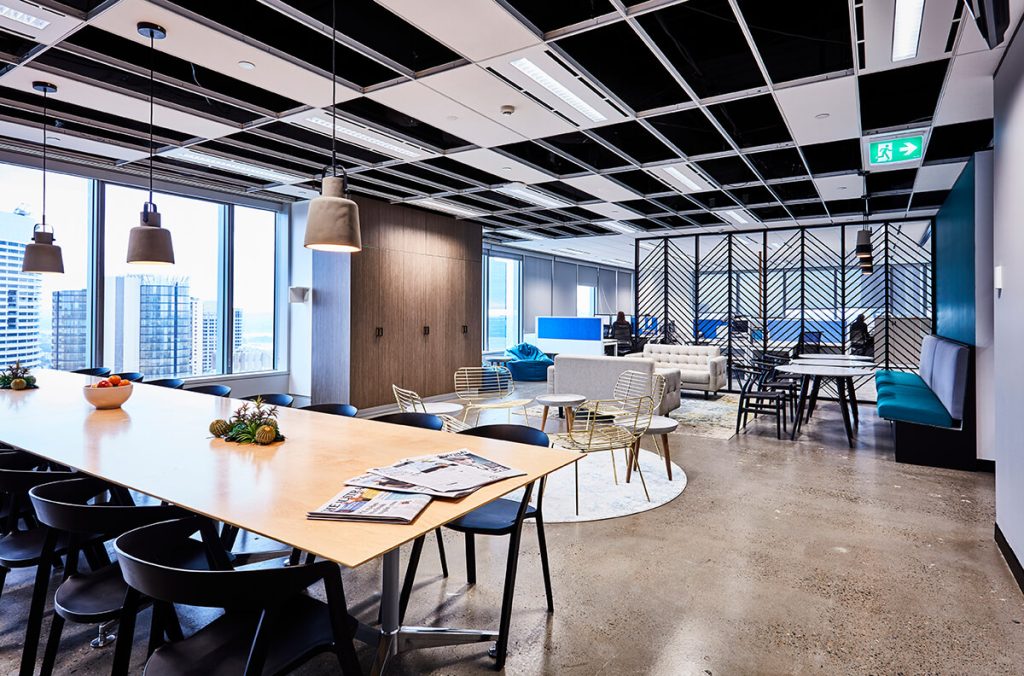
“Developers are exploring partnerships with flexible space operators as potential anchor tenants, recognizing their added value as workplace amenities. These operators offer convenient solutions such as meeting rooms, additional seating, and, in some cases, work passports that provide access to multiple locations,” KMC Savills said.
Looking ahead, the real estate services firm emphasized that operators are expected to broaden their footprint to meet the growing demand for flexible, experience-driven workspaces fueled by the popularity of hybrid work,” the real estate services firm said.
“Turnkey office spaces are poised to gain momentum as businesses prioritize flexible, move-in-ready workspaces that enable rapid scaling, offering a competitive advantage over traditional furnished offices.
“Flexible office spaces located in or near residential areas are projected to see increased demand, driven by occupiers seeking convenient, fully equipped work environments close to work,” KMC Savills said.
Figures from KMC Savills showed that Metro Manila continues to dominate the flexible office market, with Bonifacio Global City (BGC) leading the pack as it houses 29 flexible space centers and a total of 12,800 seats.
This is followed by the Makati CBD area, which hosts 12,100 flexible workspace seats, following the addition of 6,700 square meters (sqm) of shared office space over the past year.
Additionally, another 4,000 sqm is expected to come online this year, offering modern workspace solutions for businesses—despite the district’s aging building stock.
“Metro Manila’s contemporary seat lease facilities offer a comprehensive array of amenities. Beyond fundamental provisions like coffee lounges and soundproofed phone booths, many include expanded pantry areas and recreational zones like game or quiet rooms, promoting tenant well-being,” KMC Savills said.
“Increasingly, less common amenities provide a competitive edge. These include on-site fitness centers, showers, and nap rooms for convenience and recharge. Specialized spaces like podcast studios also cater to modern business needs, significantly enhancing the overall tenant experience,” it added.
Outside Metro Manila, Cebu boasts the strongest flexible workspace market with 20 centers offering 14,300 seats, 71 percent of which are concentrated in Cebu IT Park.
Clark is also steadily gaining traction as a flexible workspace hub, currently offering 1,300 seats.
“By 2025, an additional 2,800 sqm of space is set to launch, catering to the growing number of tech firms and startups attracted by the area’s favorable tax incentives and business-friendly environment,” KMC Savills said.
While key business districts continue to account for the bulk of the flexible office supply, the real estate services firm noted that business expansions and new site developments have moved beyond traditional central business districts, extending into fringe and provincial areas to meet the needs of companies prioritizing workforce accessibility and operational proximity.
The report noted that emerging markets like Baguio and Dumaguete are seen to be expanding flexible workspaces, given the lower building rents, allowing expansion of shared office amenities.
Meanwhile, the report also highlighted that Makati CBD offers a diverse range of pricing, with entry-level seats starting at P9,000, while high-end workspaces on Ayala Avenue can go up to P36,000 per seat, featuring premium design and robust IT infrastructure.
“Shared office facilities in BGC, Makati Fringe, and Clark are typically located in premium buildings with newer and more modern infrastructure. This higher standard is reflected in pricing, with rates averaging above P14,000 per seat,” KMC Savills said.
It added that outside Metro Manila, Cebu has established itself as the most premium flexible workspace market, with rates exceeding those in select Metro Manila districts.
#PropertyReportFeature
#FeaturedStory
