

The Philippine construction industry faces persistent challenges, from slow adoption of advanced technology to a widening shortage of skilled labor. A recent report by Research and Markets (August 2025) highlighted the country’s significant labor deficit, leaving projects vulnerable to delays, human error, and inconsistent quality.
For homeowners, these industry realities often translate into missed timelines, fluctuating material standards, and cost overruns—high stakes when building a family’s most significant investment.
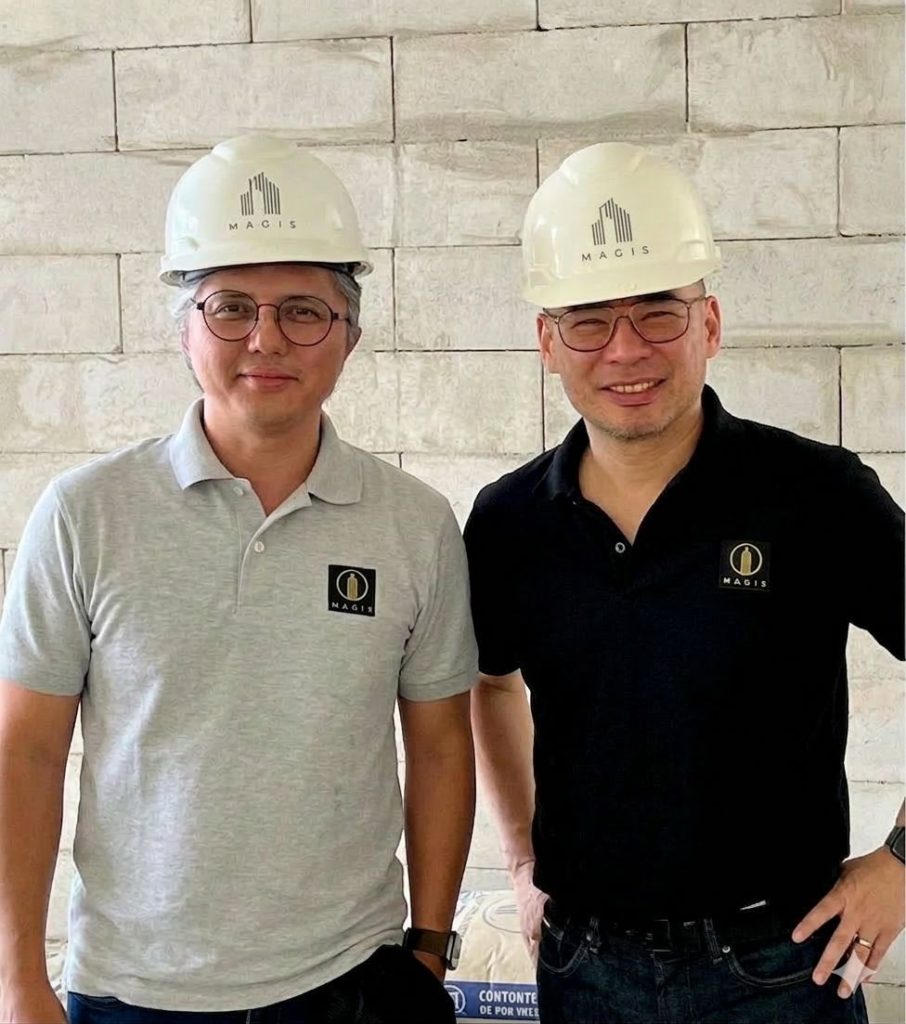
Construction firm Magis X seeks to change that by introducing robotic construction systems in the Philippines. For founders Paolo Periquet and Gino Cariño, the move toward robotics is a practical response to longstanding inefficiencies and an opportunity to improve how homes are built.
“We realized the real problem wasn’t effort. It was the system—the delays, the miscommunication, the duplicity, the rework,” says Periquet. “Magis X is a response to that.”
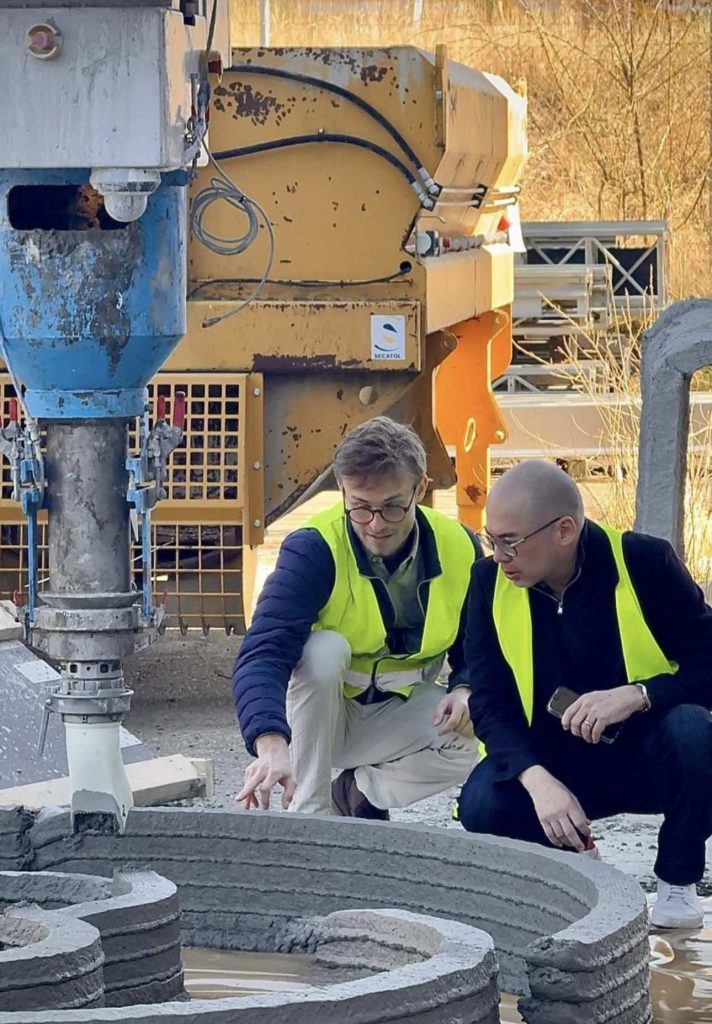
The company has partnered with Danish 3D concrete printing firm COBOD, supported by global industry partners including PERI, Holcim, and General Electric. Magis X uses robotic tools to execute structural tasks with greater precision, helping stabilize timelines, enhance build quality, reduce material waste, and support site safety—while keeping craftsmanship and engineering judgment central.

“The goal is not to replace craftsmanship, but to augment it—to take what has traditionally been a craft-driven process and evolve it into one that is more precise and consistent,” says Cariño. “By integrating robotics and industrial-grade systems, we can expand design possibilities, improve reliability, and elevate performance—while keeping craftsmanship and engineering judgment at the center.”
Robotic concrete extrusion forms structural walls guided by digital building models, while engineers and builders complete reinforcement, services, and finishing through conventional methods. Though new locally, this technology has already been applied to homes, apartments, and offices across Europe, the U.S., Asia, and the Middle East. In Texas, ICON and developer Lennar have built over 300 homes using similar systems.
Periquet, inspired by his own homebuilding challenges 15 years ago, founded Magis to raise construction standards. With 64 completed residential projects—many designed by architects including Ed Calma, Dominic Galicia, Anthony Nazareno, Tina Periquet, and Jorge Yulo—the firm has earned a reputation for executing complex architectural homes with precision.
Magis X extends this philosophy to robotic construction, allowing architects to execute complex designs faithfully while reducing compromises required by conventional methods. The company’s first robot-assisted home, expected to break ground later this year, will demonstrate how robotics can integrate into mainstream practice.
“It is not a new kind of house,” Cariño emphasizes. “Just a new level of control. The same building code applies. Structural design, reinforcement, engineering sign-offs, and permits remain unchanged.”
“We didn’t set out to compete in construction. We set out to redesign how it works,” adds Periquet. “Magis X is still Magis. It’s about giving architects their ideas back, giving homeowners certainty, and taking a real step toward ending ‘Construction Hell.’”
Discover more about Magis X and its projects at magisconstruction.com.
#PropertyPR #MediaRelease
