

The Philippine manufacturing sector has shown some resilience over the past few years. Latest data from the Philippine Statistics Authority (PSA) showed that the sector accounted for about a fifth of the country’s national economic output in 2025. IHS Markit also reported that the Philippine Manufacturing Purchasing Managers’ Index (PMI) rose to 50.2 in December 2025, from 47.4 in the previous month. An index of above 50 indicates an expansion in the country’s manufacturing sector.
More high-value manufacturing firms continue to locate in the Philippines. While the country has yet to foster a comprehensive supply chain system similar to what our ASEAN peers have developed over the past few years, these fresh and expanding investments signal the Philippines’ gradual expansion as a key manufacturing hub in ASEAN. This is a positive development for national developers with a massive industrial footprint.
Rising PMI, improving infrastructure connectivity, and improving labor productivity support the optimism and dynamism we are currently seeing in the market.
Big-ticket manufacturing investments to drive industrial demand
PSA reported that approved foreign pledges committed to fund manufacturing projects amounted to PHP81.4 billion (USD1.4 billion) in 2025, down 35% YOY. An improvement in global investor sentiment, as shown by a rise in PMI, should support a more sustainable expansion of industrial activities moving forward.
Aside from China, investment promotion agencies (IPAs) such as the Philippine Economic Zone Authority (PEZA) are actively attracting investments from Japan, South Korea, Singapore, Thailand, Taiwan, and Malaysia. According to various reports, PEZA is also prioritizing industries such as automotives, pharmaceuticals, and electronics, which, in our view, should result in greater industrial space absorption across the country.
Southern Luzon: The country’s primary industrial corridor
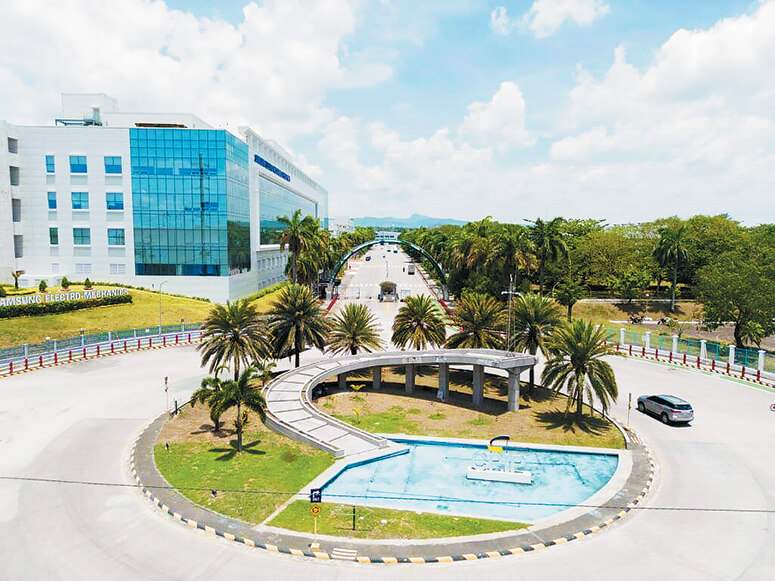
Cavite-Laguna-Batangas (CALABA) remains the country’s primary industrial corridor. Data from PSA showed that Region IV-A or CALABARZON received the largest foreign investment allocation of PHP100.4 billion (USD1.7 billion) in 2025, or 37% of total approved pledges during the period. We believe that these pledges should support industrial land and warehouse space take-up in the CALABA corridor once they materialize.
Industrial vacancy in the CALABA corridor dropped to 11.4% in H2 2025 from 16.9% H1 2025 due to stable demand. Over the past twelve months, manufacturers of equipment, electronics, air conditioners, air fresheners, and printing and packing solutions have taken up industrial space in the corridor.
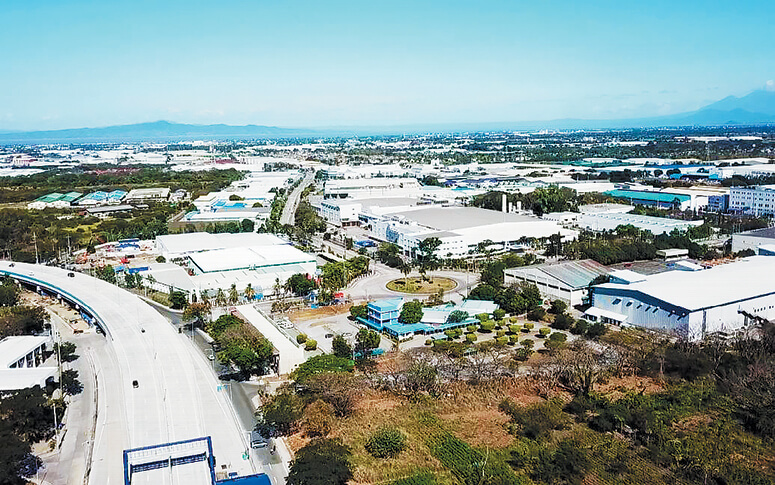
Among the big-ticket manufacturing investments in CALABA include Samsung, which is investing USD1 billion (PHP58 billion) for a new manufacturing facility in Calamba Premiere Industrial Park in Laguna. Panasonic is also investing USD52 million (PHP3 billion) to launch new projects in Laguna Technopark. The company plans to manufacture refrigerators and washing machines.
Central Luzon in the thick of things
From 2026 to 2028, Colliers sees the delivery of 930 hectares of new industrial supply in Central Luzon, dwarfing the 240 hectares of expected new supply in Southern Luzon during the same period. With an improving business environment and bullish prospects for the region, we see more higher-value manufacturers locating in Central Luzon, especially in Pampanga, Tarlac, Bulacan, and Bataan. For instance, food and beverage (F&B) companies Coca-Cola and Ajinomoto took up almost 60 hectares of industrial space in Aboitiz InfraCapital’s TARI Estate in Tarlac. Additionally, manufacturers such as All Fashion Gloves, UET Box, and DeviceDesign expanded in Clark Freeport Zone in Pampanga.
Ayala Land is also positioning Pampanga Technopark as a hub for export-oriented manufacturing and high-value logistics. Meanwhile, we see Bulacan emerging as an industrial hotspot, particularly for pharmaceutical firms.
Industrial vacancy in Central Luzon remains elevated at 23% as of end-2025 due to substantial new supply. The elevated vacancy can also be attributed to the lack of PEZA-accredited facilities in the region.
Colliers believes that Central Luzon remains a viable industrial location outside of CALABA, given its skilled manpower and improving infrastructure. In our opinion, the completion of significant industrial supply in Central Luzon should provide opportunities for manufacturers and locators to haggle for more competitive lease rates.
#PropertyReportFeature
#FeaturedStory
