

Property Report sat with National Artist Maestro Ryan Cayabyab, whose passion for the arts remains as resonant as the music he has given generations of Filipinos—felt not only in sound, but in the shared spaces where stories unfold. The conversation went beyond performance and into something deeper—why theaters, as physical and communal spaces, matter, and why they can be considered part of how we define home.
For Cayabyab, a theater is more than bricks and seats. It is a space that reflects life and brings people together. “In my opinion, theaters are spaces where you can mirror what is happening outside—but you can present it in many different ways…with a big additional twist,” he said. “Artists can create something more expressive, something more impressive.”

It is this ability to distill life—whether intimate or grand—that makes theater, both as venue and craft, a powerful cultural mirror. “The essence is so important,” he explained. “You can turn it inside out, make it big or small, subtle or extravagant. Creating something out of an essence or an idea—that’s what theater can do.”
For Cayabyab, this role extends beyond performance. “So theater is a mirror of the world for Filipinos—of our society, and of the world beyond us,” he added.
Theater in the age of screens
When much of the world now interacts through screens and algorithms, Cayabyab believes the value of live, shared experience has never been greater. “Theater is one of the best places for real human interaction, especially in the age of Netflix, YouTube, and social media,” he said. “It is a physical space where people gather, feel, think, and experience together.”
For him, the contrast between theater and online platforms is stark. In social media, voices can be faceless and fleeting—but in theater, truth is immediate and collective. “Truth comes out. That’s why it’s very important for performers to understand truth—because when they perform, it has to come out as true.”
In the same way that homes ground people amid constant digital noise, theaters offer spaces to slow down, be present, and connect—making them essential to how cities, communities, and cultural life are shaped.

The Proscenium Theater: When architecture listens to art
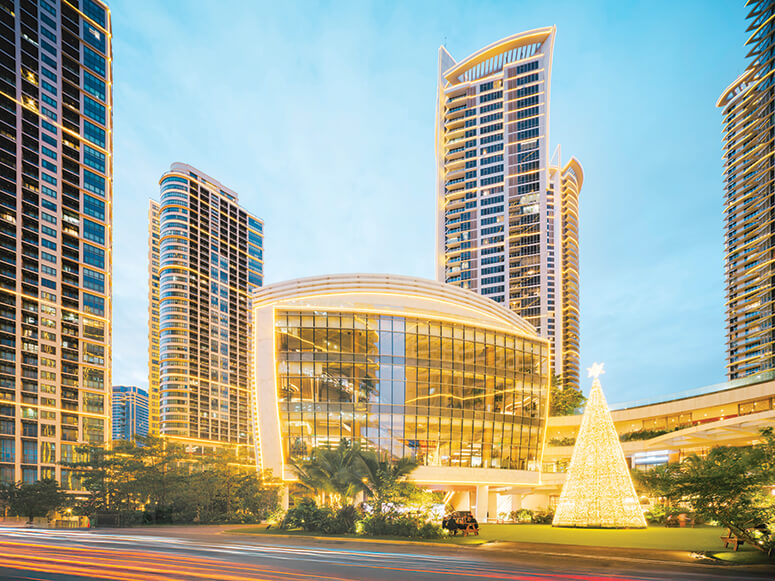
Cayabyab has long advocated for spaces that elevate performance, and his admiration for the Proscenium Theater—a cultural landmark in Rockwell Center, Makati—is evident.
Designed as a 780-seat modern venue with natural acoustics and carefully considered sightlines, the theater forms part of a mixed-use enclave that brings together residential living, retail, and performance within a walkable urban community.
“First, the stage is not so far from the audience,” Cayabyab said. “It’s so close—they’re just there. Because of that closeness—and the way the theater is built—the sound fidelity is excellent. You cannot miss anything.”
He was particularly emphatic about the theater’s acoustic shell, which allows performances without microphones—preserving the true sound of orchestras, choirs, and classical recitals.
“That’s the real sound of an orchestra,” he said. “Amplified sound is not the same.”
For Cayabyab, Proscenium Theater fills a long-standing gap in the country’s cultural infrastructure.
“We have been in need of a dedicated concert hall. With the Proscenium Theater, we finally have a venue that can be used for theater, concerts, orchestras, and ballet,” he shared. “Acoustically speaking, it’s almost perfect. I’ve heard choirs and orchestras there, and it’s the best sound I’ve heard in my years of listening in the Philippines.”
The role of theaters in creative futures
Looking ahead, Cayabyab sees a clear connection between spaces and creative growth. “The more platforms and theaters and stages we have, the more artists will create,” he said. “Build it, and they will come.” He has witnessed this dynamic in other countries, where traditional and contemporary art forms thrive side by side because spaces exist to support them.
His message to young Filipino creatives is both practical and urgent, “Support is important—but artists must also create first. You cannot wait for sponsors before you start. You have to begin, even if it’s imperfect.”
Ultimately, he believes theaters serve as catalysts—places where imagination meets structure, and possibility takes shape. “The more young people watch theater, the more possibilities they see,” Cayabyab said. “Art is not about making money. It’s about becoming a better human being.”
Love Letters at Proscenium Theater
The second chapter of National Artist Ryan Cayabyab’s MaestroClass Concert Series, Love Letters runs from February 13–15, 2026, at the Proscenium Theater in Rockwell Center, Makati.



The concert revisits classic Filipino love songs—many deeply woven into the country’s cultural memory—and brings together original interpreters Celeste Legaspi, Basil Valdez, and Ogie Alcasid. For Cayabyab, Love Letters is both celebration and remembrance: an invitation to experience music not simply as nostalgia, but as a shared moment—best felt live, in a space designed for connection.
Led by Cayabyab, Love Letters presents a carefully curated journey through the compositions of George Canseco, Jose Mari Chan, and Willy Cruz—from songs that defined first loves to melodies that have endured through time—promising an evening filled with heartfelt connection.
Tickets for Love Letters are now available via TicketWorld (online and outlets) and at the Power Plant Mall Cinema.
